
In short: U-625 was a Type VIIC U-boat built by Blohm & Voss in Hamburg and commissioned on 4 June 1942. On 10 patrols it sank three merchant ships totalling 18,751 gross register tons and two auxiliary warships, mostly in the Arctic. On 10 March 1944 it was sunk west of Ireland, at about 52°35′N 20°19′W, by Sunderland flying boat EK591 “2-U” of 422 Squadron, Royal Canadian Air Force. All 53 crew were lost. It was 422 Squadron’s only confirmed U-boat kill.
For many years this web address hosted a hobbyist’s page about building a large-scale model of U-625, made by a relative of one of the Sunderland’s crew. That page has long gone. This guide replaces it with a short, sourced history of the submarine and its sinking, with notes for model makers. Travel-Net Notes is an independent site and not the former Travel-Net internet service provider.
The boat
U-625 was a Type VIIC, the most numerous class of German submarine in the Second World War. Type VIICs were about 67 metres long, carried a crew of around 44 to 52, and were armed with five torpedo tubes and a deck gun. U-625 was built at the Blohm & Voss yard in Hamburg and commissioned on 4 June 1942.
Most of its war was spent in Arctic waters, operating from Norway against the Allied convoys carrying supplies to the Soviet Union. According to uboat.net, it sank three merchant ships totalling 18,751 gross register tons and two auxiliary warships over 10 patrols.
The last patrol
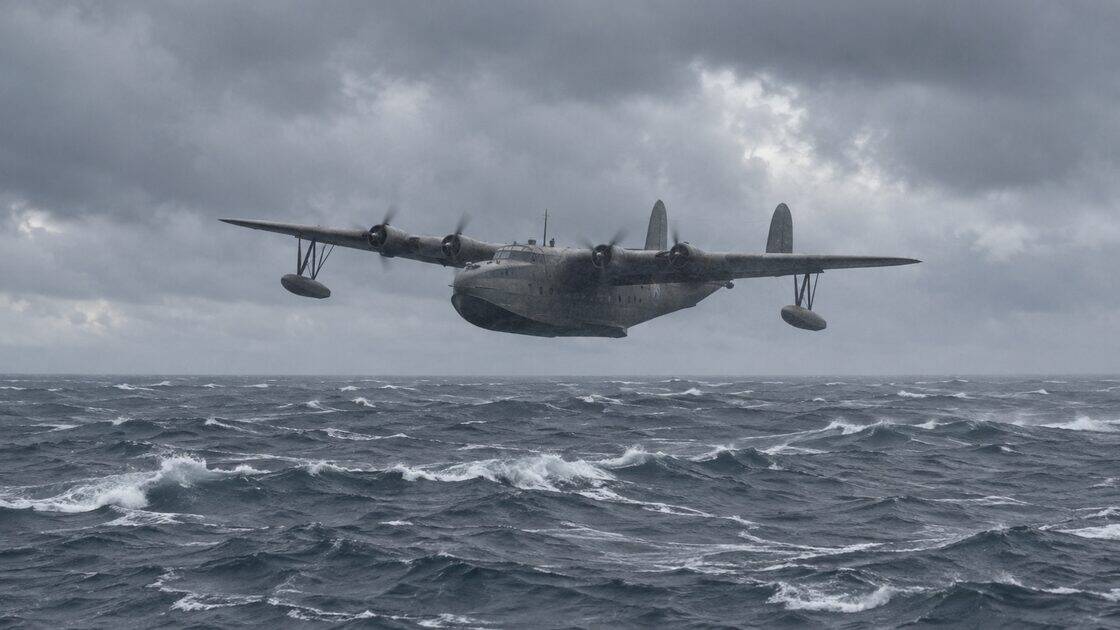
Early in 1944 U-625 was moved to the Atlantic. By then Allied aircraft with radar and longer range were covering most of the ocean, and U-boat losses were very high. On 10 March 1944, U-625 was on the surface west of Ireland when it was found by a Short Sunderland flying boat of 422 Squadron RCAF, serial EK591 and code letters “2-U”, flying from Castle Archdale in Northern Ireland.
The aircraft was captained by Warrant Officer W. F. Morton, with Flight Lieutenant S. W. Butler as screened captain. The U-boat stayed on the surface and fired back with its anti-aircraft guns as the Sunderland attacked with depth charges. The submarine was badly damaged. According to Canadian accounts, its crew signalled to the aircraft and abandoned the boat before it sank, but in heavy seas none of the 53 men survived. Butler later received the Distinguished Flying Cross.
422 Squadron
No. 422 Squadron RCAF was a Canadian maritime patrol squadron formed in 1942 and attached to RAF Coastal Command. It flew Catalinas and then Sunderlands on long, mostly uneventful patrols over the Atlantic. The attack on U-625 was the squadron’s only confirmed U-boat sinking of the war, which is why the action is well documented in Canadian air force histories.
Key facts
- Type: VIIC
- Builder: Blohm & Voss, Hamburg
- Commissioned: 4 June 1942
- Patrols: 10
- Ships sunk: 3 merchant ships (18,751 GRT) and 2 auxiliary warships
- Sunk: 10 March 1944, west of Ireland, about 52°35′N 20°19′W
- By: Sunderland EK591 “2-U”, 422 Squadron RCAF
- Losses: all 53 crew
Notes for model makers
U-625 is a popular subject for model builders because it is a standard Type VIIC with a well-recorded end. Large kits of the VIIC exist in 1:72 scale, which produces a model close to a metre long and allows a lot of detail. Few photographs of U-625 itself are known; the best-known images were taken from the attacking Sunderland during the action, so builders who want an accurate model of this boat usually work from those images, general VIIC references and published histories. The anti-aircraft armament and conning-tower layout changed during the war, so check what the boat carried in early 1944.
Common questions
When was U-625 sunk?
On 10 March 1944, in the North Atlantic west of Ireland.
Who sank U-625?
A Short Sunderland flying boat, EK591 “2-U”, of 422 Squadron, Royal Canadian Air Force.
Were there survivors?
No. All 53 crew were lost in heavy seas after leaving the boat.